What My Knee Injury Taught Me
By: Sumera Garcia-Quadri
Dear members, instructors, and peers,
Since January, I’ve been on an intense rehab journey. Just as my jaw pain got better after two long years, I hit a frustrating setback: knee osteoarthritis, knee tendonitis, and a hip impingement.
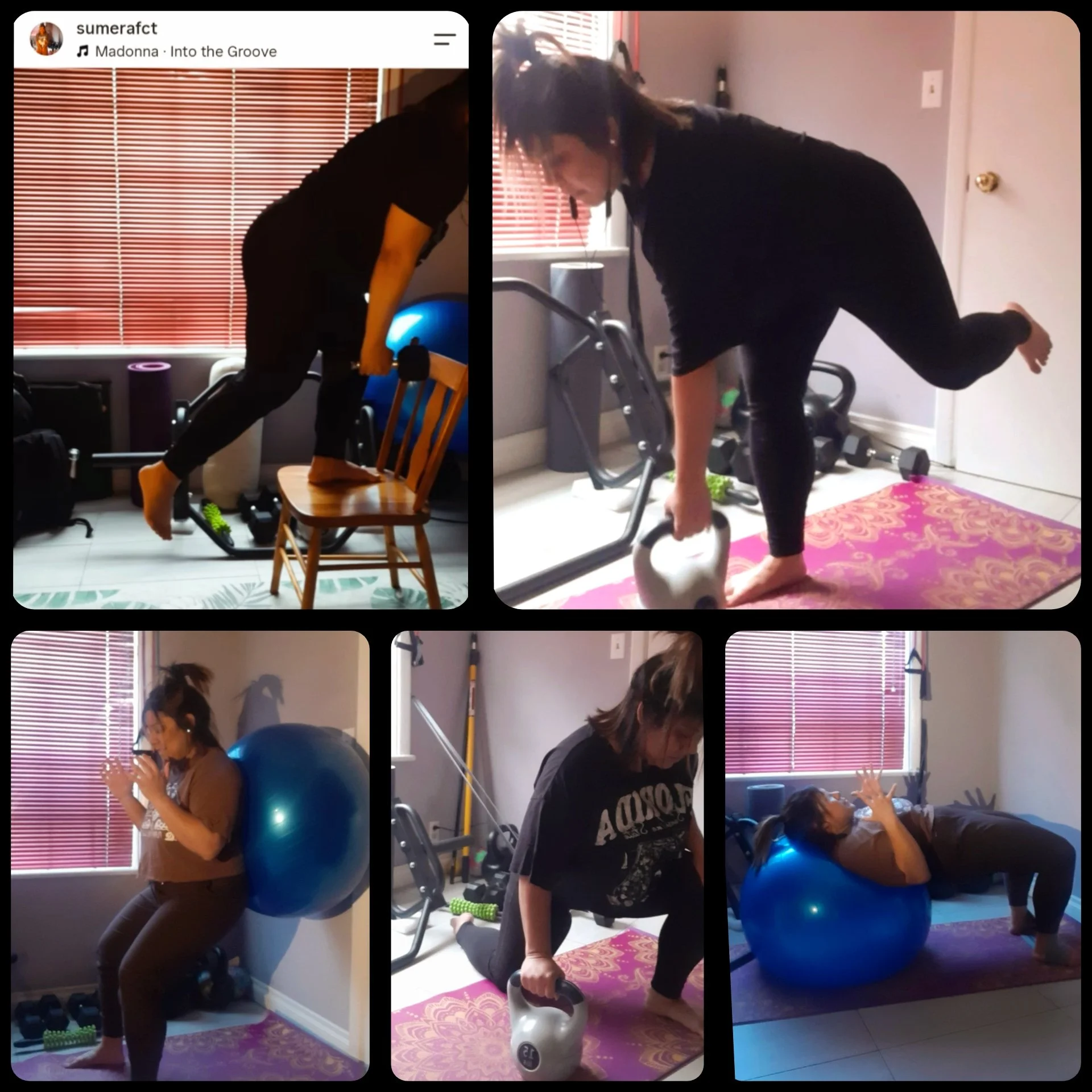
Luckily, my youth Baseball back round, sport coaching tools, and my strength, conditioning, and corrective exercise training helped me kickstart my own recovery. Over several months, I moved through what you can call the “Return to Sport” stages which has allowed me to begin jumping again (HUGE! for me) and get back to instructing and dancing more regularly.
However, I realize that not all of our members have sports or rehab training in their back pocket which is why finding the right clinician matters so much.
In a city saturated with stunning clinics, finding the BEST person for your pain and recovery is critical, especially when you’re paying out of pocket. Many clinicians are great at hands-on care, but their exercise plans often stop at the basic level. Because many of you are active outside of our seasonal dance and fitness classes, I feel you would benefit from having an active or athlete clinician who understands high-level movement progression vs. a rest and wait approach. Their goal is usually to get you back to real life as soon as possible without them, instead of keeping you coming back.
Personally, I drive 30 minutes to see a manual osteopath. She was a personal trainer who overcame paralyzing back injuries to Olympic weight-lifting over 200lbs while pregnant. She got my whole body back into alignment to reduce the strain on my hip and knee. Within weeks, I was walking up and down stairs and squatting again with less pain.
If you’re experiencing pain and hoping to return to an active lifestyle OR just trying to stay pain-free, here are 3 tips to finding the best person for you:
Match backgrounds: Look for a clinician (i.e. Osteo, RMT, Chiro, Physio) who lives an active lifestyle and understands the specific demands of your physical activity. If the person has personally overcome injuries, they may have greater empathy and practical knowledge regarding your recovery timeline and which exercises they want to begin using to get you back to real life.
Ask around: Ask friends and family members who successfully bounced back from debilitating injuries about who helped them recover and what they did for them.
I noticed some spaces are not made for kids and seniors (like when they don’t have that wheelchair door opening button) which makes it difficult for them to get good help.
Ask for a return to activity plan: Choose a practitioner who conducts a thorough assessment and can create a clear return to activity plan. They should be able to lead you safely through the stages OR refer you to someone at their work - like an experienced trainer who has training in injury recovery, strength and conditioning, and/or corrective exercise.
Every recovery journey looks different, some days will feel good and some days won’t. My hope is that you find the right rehab person to support you through all of it.
Hoping you dance and move for years to come,
Sumera