Living with Jaw Pain as a Fitness Instructor: The Therapies & Habits That Helped Me Recover
By: Sumera Garcia-Quadri
Disclosure: This blog reflects my personal TMJ pain journey, and is not medical advice.
In 2024, following a series of dental procedures (two root canals performed on a single tooth in about a week), 2 ER visits in the middle of the night, and seeing over 5 more dentists to fix the situation, I developed chronic TMJ pain (also known as temporomandibular joint disorder or TMJD) and awful headaches as a result. Eventually, I began experiencing SCARY electric like shocks in my jaw. I thought I had new cavities, but a dentist said my teeth looked fine.
The jaw pain disrupted my sleep, caused me to gain a lot of weight, and deeply affected my energy and performance as an instructor. When you instruct kid’s fitness, dance, and group fitness classes for a living, your voice and your physical appearance are everything and I felt like I was failing at my job.
I see so many people in online groups asking desperately for TMJ pain relief. Because I’ve lived it (and still manage it today), I want to share the therapies and daily habits that finally helped me get my life back.
Here are the therapies I tried to get back to feeling better
Finding the Right Dentist: Despite my fear of going back to the dentist, I eventually found a thoughtful, Canadian-trained dentist (a University of Toronto graduate) who actually listened. I shared my research on TMJ orthotic night guards with him, and he worked with me to create a custom solution in my budget. Not only does wearing it nightly help keep my jaw aligned and reduce grinding, but it also fills in a missing tooth gap (an implant can cost up to $7,000 out of pocket and sometimes, they just aren’t successful). This dentist and his hygienist let me take breaks during my visits and use mouth pieces so my jaw rests.
TMJ Massage Therapy: My first step toward getting better was seeing my local massage therapist for lymphatic drainage and massage on my face, neck, shoulders, and inside my mouth (intra-oral). It worked temporarily and out-of-pocket costs kept me from going as often as I liked.
Continuing Education: Being in movement, I registered in a physical therapy course specifically focused on TMD (temporomandibular disorders) so I could better understand what was causing pain and learn jaw exercises and things that I could do to help calm my jaw pain down when it was bad.
Electro-Acupuncture: After seeing an ad, I tried electro-acupuncture with a chiropractor. I committed to six weekly sessions, and then went every few weeks and eventually monthly. It stopped those scary electric shocks and calmed my jaw muscles down. I would sleep for hours afterward, and that rest was huge for my recovery.
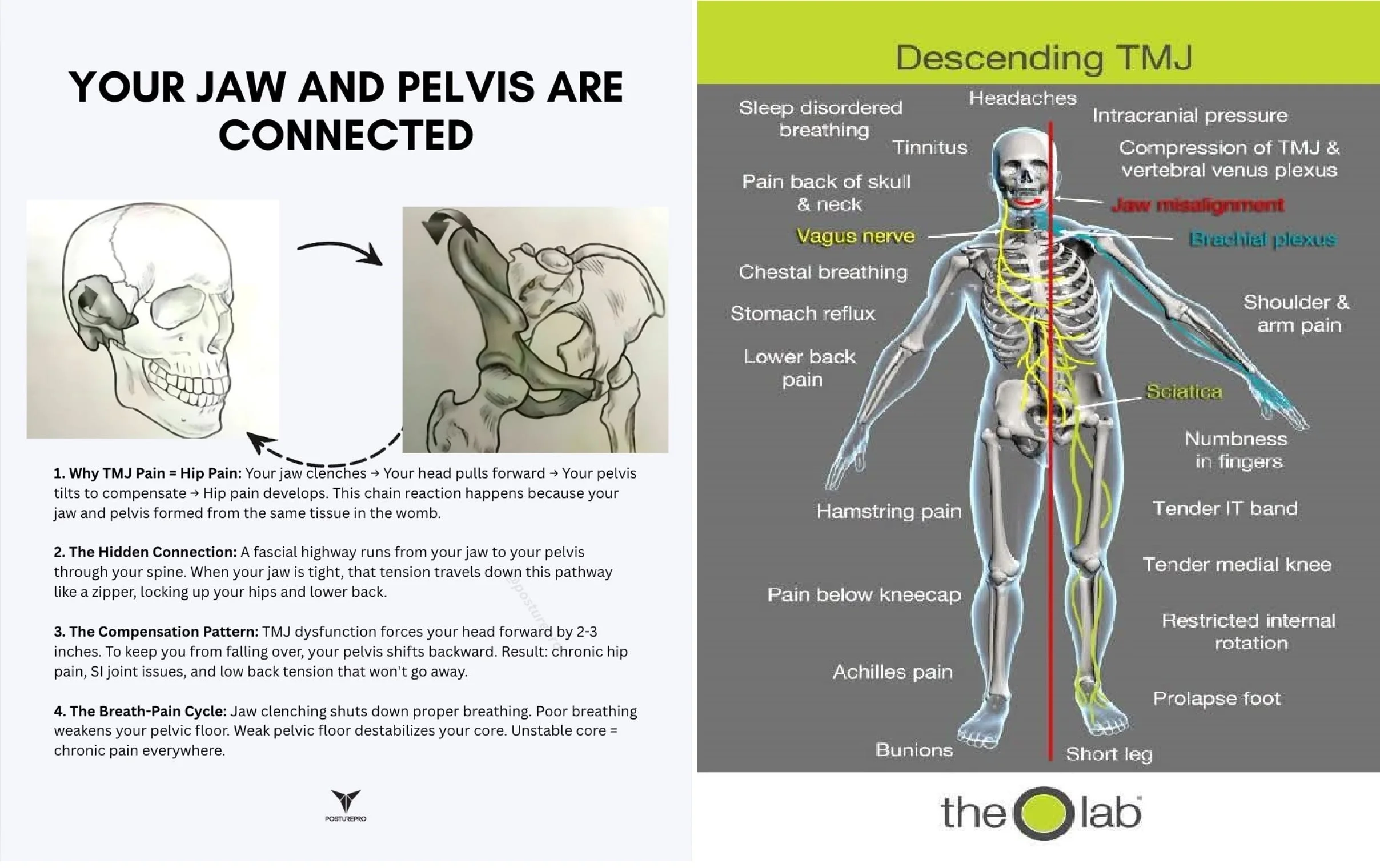
Osteopathy: In 2026, I choose a manual osteopath practitioner for knee and hip injuries. Because manual osteopaths treat the body as one unit, focusing on nerves, blood flow, and lymphatic drainage, I hoped she could help my jaw at the same time. She found my pelvis and shoulder were severely twisted. By slowly realigning them, she took the strain off my lower body, neck, and jaw all at once. Within a few sessions, I felt better from head to toe. It’s important to mention that I choose her because I found her relatable, she was a woman who had played sports just like I did as a kid and teen and was a former strength coach. But most importantly, she overcame severe back injuries to Olympic weightlifting over 200lbs while pregnant using osteopathy - she gave me hope!
6 daily changes that helped me
1. Give Your Voice a Rest
The jaw is the most used joint in the body (we use it to eat, speak, and it’s the first to get hurt when you’re sick and stressed out). As an instructor, I had to practice limiting talking outside of class just to let the joint calm down and reduce inflammation.
2. Stick to Soft Foods
Hard or chewy foods, especially chewing gum, nuts, toast/sandwiches, and apples, caused jaw soreness and headaches. Switching to softer foods gave my jaw the break it needed to heal.
3. Fix Your Sleeping Posture
Along with wearing my night guard, I trained myself to stop sleeping on my painful right side. I usually sleep without a pillow now or use a very thin one, this helped change my neck alignment at night and allows me to wake up with far less jaw pain and fewer headaches.
4. Look Beyond the Jaw (Alignment Matters)
Through my background in youth strength and conditioning and corrective exercise training, I know how deeply connected the body really is. Just as shoulder pain during a bench press can come from the neck and jaw, or knee pain during a squat can stem from your pelvis, ankles, or feet, I had to address my jaw pain by looking at my entire kinetic chain, from my neck and shoulders down to my hips, pelvis, and feet (since my feet carry my entire body weight!).
I leaned heavily on the exact corrective exercise and exercise therapy protocols I now use to help my own clients. For me, that meant using specific feet and ankle and pelvic tilt corrective exercises before deadlifts, and performing upper-body exercises lying flat on my back or with my head supported against a wall to keep my jaw and neck properly aligned. Also, I now wear wide toe box, 0 drop shoes when I instruct to help with my posture and balance.
5. Calm Your Nervous System
Pain triggers stress, and stress makes you clench your jaw / grind your teeth. Practicing positive thinking and belly breathing helped me calm down my system.
6. Finding a Caring Family Doctor or Naturopath For Hormones & Inflammation
Working with a thoughtful doctor or naturopath to check hormone levels, like estrogen levels, which plays an important role in muscle repair, joint health, and tissue health. For my own recovery, I added eggshell membrane and omega-3 supplements to help with my jaw, hip, and knee joints, and calm full body inflammation.
As you can see, my TMJ pain journey completely transformed my life and career. If you’re going through jaw pain right now, you’re aren’t alone. Recovery takes time, and sometimes the best thing you can do for your jaw is to rest it and breathe.